
Resilience: The Courage to Begin Again
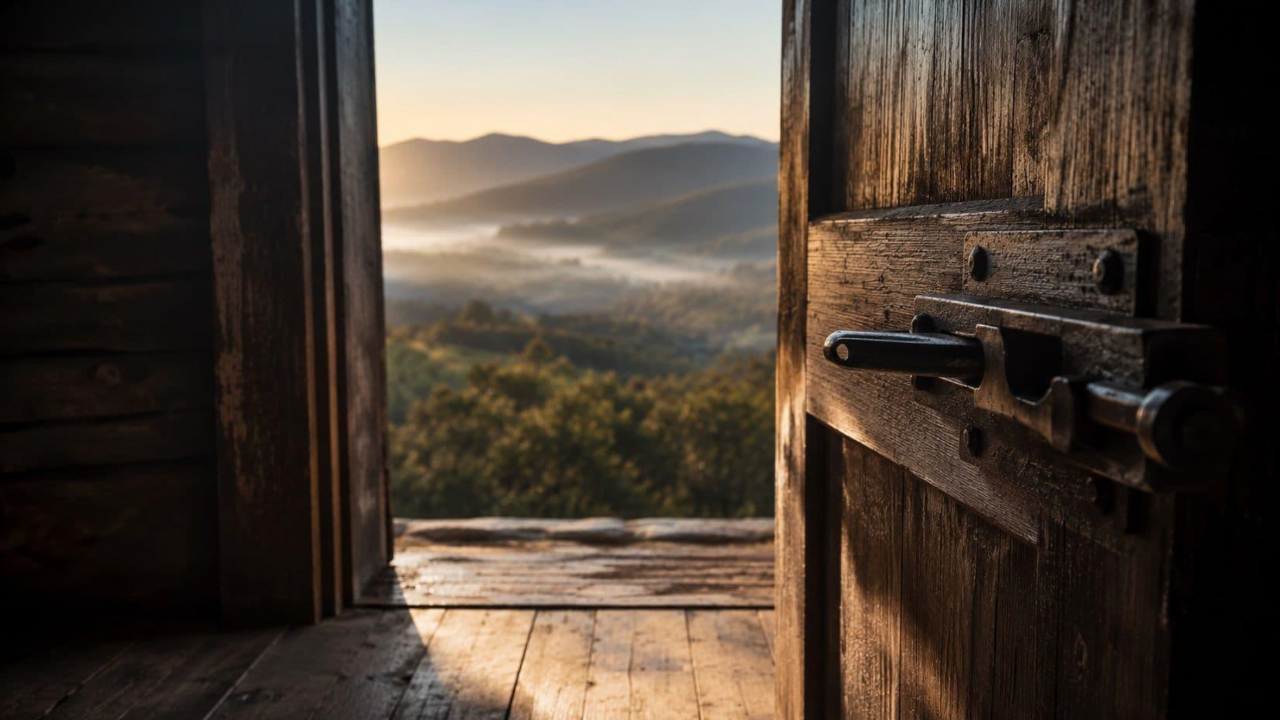
Perhaps resilience isn't about returning to who we were. Perhaps it's about discovering who we can become.
We often think of resilience as the ability to bounce back.
To recover from adversity. To pick ourselves up, dust ourselves off, and return to life as it was before.
But what happens when life has changed us so profoundly that there is no going back?
When a relationship ends. When someone we love dies. When our health changes. When the career we've devoted decades to no longer feels meaningful. Or when we wake up one morning and realise that the life we've worked so hard to build no longer feels quite right.
Sometimes, there is no returning to who we were.
And perhaps that's not what resilience asks of us.
Resilience isn't always about bouncing back
The traditional understanding of resilience focuses on our capacity to adapt to adversity, manage stress, and recover from difficult experiences.
But resilience doesn't necessarily mean emerging unchanged.
Life shapes us. Our experiences influence our beliefs, priorities, relationships, and understanding of ourselves.
Sometimes adversity leaves us exhausted, uncertain, or grieving for a version of life that no longer exists.
And sometimes, the most meaningful form of resilience isn't finding our way back.
It's finding a way forward.
Not because we've forgotten what happened. Not because we've overcome every difficulty. And certainly not because we've somehow become immune to pain.
But because we've discovered that our story can continue, even when it unfolds differently from the one we imagined.
The quiet courage of beginning again
We tend to imagine new beginnings as dramatic events.
Leaving a relationship. Moving to another country. Changing careers. Starting a business. Falling in love again.
And sometimes they are.
But more often, resilience reveals itself in much quieter ways.
It's the person who begins trusting again after being deeply hurt.
The parent who gradually rediscovers an identity beyond caring for others.
The person who learns to set boundaries after a lifetime of putting everyone else first.
The grieving partner who allows themselves to experience happiness without feeling that they're betraying the person they've lost.
Or the person who simply gets out of bed after a difficult night and decides to give today another chance.
These moments rarely attract attention.
There are no grand announcements. No applause. No dramatic transformations.
Just ordinary people finding the courage to take another step.
And sometimes, that is an extraordinary achievement.
You are allowed to change
One of the more difficult aspects of personal growth is recognising that we may have outgrown something that once mattered deeply to us.
A relationship. A role. A belief. A dream. Even an identity.
We can become so invested in the lives we've created that changing direction feels like admitting defeat.
We tell ourselves we've come too far to turn back. That we've invested too much time. That other people are depending on us. That perhaps it's simply too late.
But changing direction doesn't mean the journey was wasted.
The things we once wanted may have been exactly right for the people we were at the time.
We are allowed to learn from those experiences.
We are allowed to want something different.
And we are allowed to change our minds about what a meaningful life looks like.
Beginning again doesn't mean everything that came before was a mistake.
Sometimes, it simply means we've grown.
It's never too late to begin again
There's a curious assumption in our culture that reinvention belongs to the young.
We celebrate young people discovering themselves, pursuing dreams, and exploring possibilities.
But somewhere along the way, we begin to treat adulthood as though our identities should become fixed.
As though, by a certain age, we should have everything figured out.
Yet the psychological development of a human being doesn't end at 30, 40, or 60.
We continue to learn, adapt, reconsider our priorities, and discover new dimensions of ourselves throughout life.
A person might discover a new passion at 55.
Find companionship at 70.
Return to study after retirement.
Or simply reach a point where they no longer feel compelled to live according to everyone else's expectations.
There is something deeply liberating about recognising that we don't have to remain the person we were ten or twenty years ago.
And that the years ahead can still hold meaning, curiosity, connection, and possibility.
Resilience doesn't mean we have to find a silver lining
There is an important distinction worth making.
Psychologists sometimes refer to post-traumatic growth — the positive psychological changes that some people report as they struggle to make sense of profoundly difficult experiences.
But this doesn't mean trauma is necessary for growth.
Nor does it mean that suffering automatically makes us stronger.
Some experiences are simply painful. Some losses cannot be replaced. Some circumstances leave lasting consequences.
And not everyone has the same opportunities, resources, or support to make significant changes in their lives.
Resilience should never become another expectation placed upon people who are already struggling.
We don't have to be grateful for adversity.
We don't have to transform every painful experience into a life lesson.
And we certainly don't have to demonstrate strength every moment of every day.
Sometimes resilience means resting.
Sometimes it means asking for help.
Sometimes it means accepting that things are difficult and allowing ourselves the time and support we need.
And sometimes it means recognising that, even within the limitations of our circumstances, there may still be small choices available to us.
Perhaps beginning again starts small
We don't necessarily need to leave everything behind to create something different.
Sometimes a new beginning starts with an honest conversation.
A boundary we've been afraid to establish.
A long-forgotten interest we decide to explore.
A willingness to ask ourselves what we actually want, rather than what we've always believed we should want.
Or simply giving ourselves permission to imagine that the next chapter might look different from the last.
We cannot always choose what happens to us.
And we cannot always change our circumstances as quickly or as easily as we would like.
But with time, support, and sometimes considerable courage, we may discover possibilities we hadn't previously imagined.
Perhaps that is one of the most hopeful things about being human.
We are never entirely finished becoming.
And while we cannot rewrite the chapters that have already been lived, we may still have some influence over the pages ahead.
You don't have to start your whole life over.
Sometimes, you only need to begin again with one small part of it.
And perhaps, that too, is resilience.
At The Lighthouse Psychology, we recognise that life's transitions can be challenging, even when they offer opportunities for growth. Psychological support can provide a safe space to explore change, process difficult experiences, and find a way forward at your own pace.